Ask most readers which they prefer, a novel or a short story, and nine times out of ten they will say the novel. More story. More depth. More time with characters they have grown to love.
But in the Christian reading community, something interesting is happening. Short fiction is having a genuine moment. Readers are increasingly turning to short stories, novellas, and compact faith-driven collections as their preferred format, not because they have less time, but because they have discovered something novels sometimes miss.
Short Stories Have a Long History in Christian Storytelling
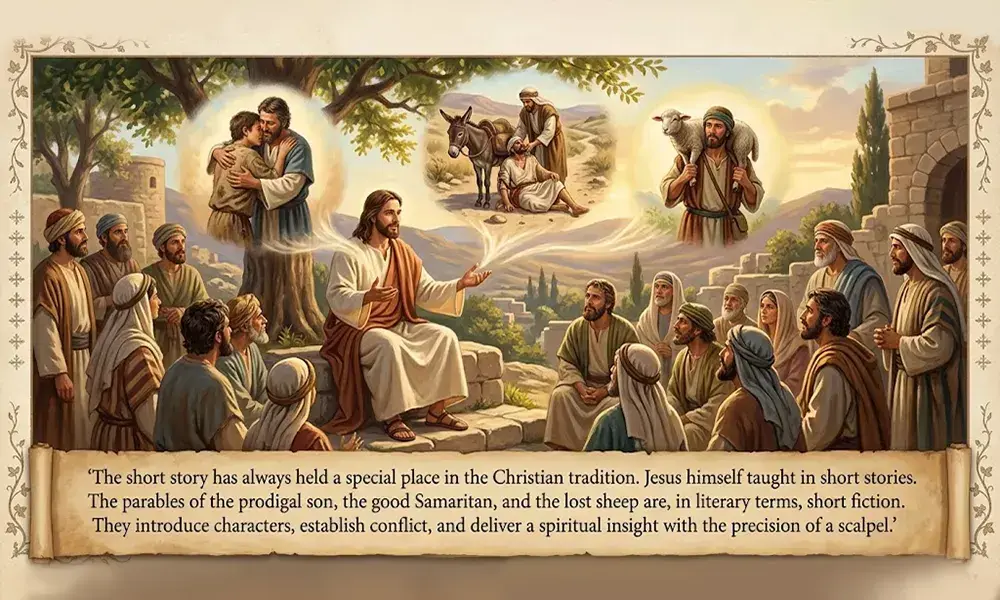
The short story has always held a special place in the Christian tradition. Jesus himself taught in short stories. The parables of the prodigal son, the good Samaritan, and the lost sheep are, in literary terms, short fiction. They introduce characters, establish conflict, and deliver a spiritual insight with the precision of a scalpel.
John Bunyan’s allegories, the testimonies shared at revival meetings, the devotional stories in collections like Chicken Soup for the Christian Soul, all of these belong to the tradition of short Christian narrative. The format is not new. What is new is the recognition among readers that it deserves as much respect as the novel.
What Short Stories Can Do That Novels Cannot
Short fiction has structural advantages that are not merely about length. They are about what the compressed form forces upon both the writer and the reader.
Immediate Emotional Impact
A novel earns its emotional moments over hundreds of pages. A short story has to earn them in the first paragraph. This creates a kind of intensity that can actually be more moving, not less. When a character’s faith crisis, moment of grace, or act of forgiveness occurs in a short story, there is no room for it to be diluted by subplot or pacing concerns. It lands full force.
Singular Focus
Every short story is essentially one story about one thing. This singular focus mirrors the way real spiritual insight often comes: not as a complex theological treatise, but as a single moment of clarity. A short story can capture that moment and hold it still long enough for a reader to examine it.
Accessibility for Busy Readers
This is the obvious advantage, but it is still worth naming. A reader who cannot commit to a 350-page novel can read a short story collection in small pieces, one story at a time, without losing the thread. For caregivers, parents of young children, students, and professionals with limited reading time, this matters.
Variety within a Single Book
A short story collection allows a reader to encounter ten different voices, ten different settings, and ten different spiritual questions within a single volume. That variety is one of the great pleasures of the format and something no single novel can offer.
What Novels Do Better
Fairness requires acknowledging what novels do that short stories cannot. A novel has the space to develop a character across years of fictional time. The reader watches someone grow, make mistakes, face consequences, and change slowly. That kind of arc mirrors the actual pace of human transformation in a way a short story simply cannot replicate.
Novels also build worlds. The Mitford series by Jan Karon works because readers return to the same small town, the same characters, the same community over multiple volumes. That depth of immersion is not available in a short story.
For readers who want the full novel experience, Christian fiction offers an extraordinary library of options. But for readers who want concentrated faith narratives that can be read in a single sitting and returned to again and again, short fiction is unbeatable.
C.L. Holden and the Short Fiction Tradition
C.L. Holden, the author at Stories by CL Holden, works in the short-to-medium fiction format because she understands what it can do. Her stories are drawn from real experience: years in law enforcement, encounters with human crisis, and a faith that was forged in the middle of actual difficulty. That background gives her fiction the weight that only lived experience can provide.
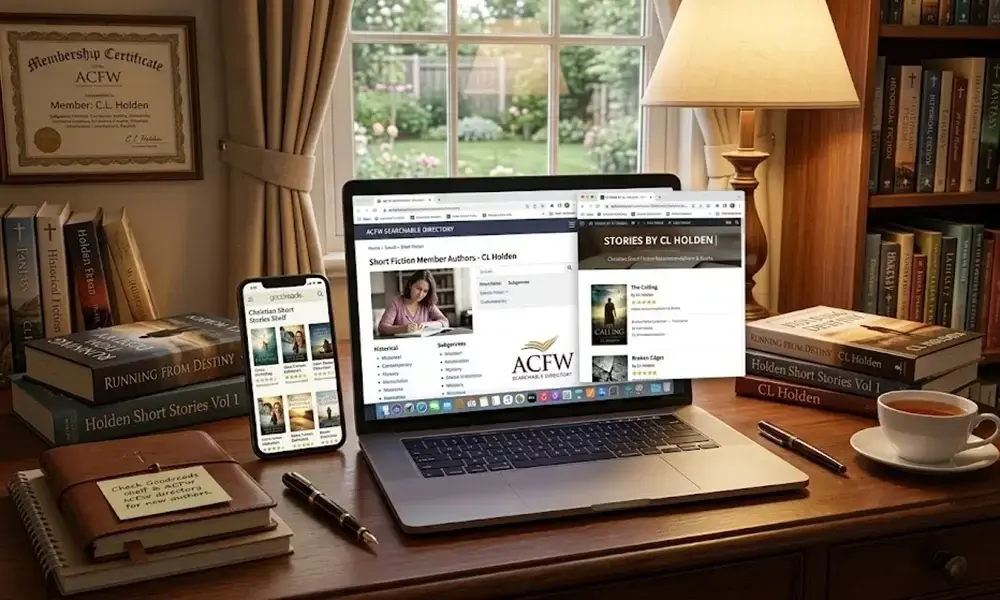
Her book Running from Destiny explores the theme of purpose and divine calling in a narrative that moves quickly but lands deeply. It is exactly the kind of reading experience that the short fiction format, at its best, delivers. You can learn more about her work on the Stories by CL Holden blog.
Where to Find Great Christian Short Fiction
The Goodreads Christian Short Stories shelf is a good starting point for reader recommendations. The ACFW (American Christian Fiction Writers) organization also supports authors working in short fiction and maintains a searchable directory of member authors across all subgenres.
For something immediate, the blog at Stories by CL Holden provides both reading recommendations and access to books by an author who has made short Christian fiction her craft.
Final Thoughts
The competition between short stories and novels is a friendly one. Both have their place on the shelf of any serious Christian reader. But if you have never given the short story format the attention it deserves, this is a good time to start. You might find that the story that stays with you longest is one you read in twenty minutes on a Tuesday afternoon.